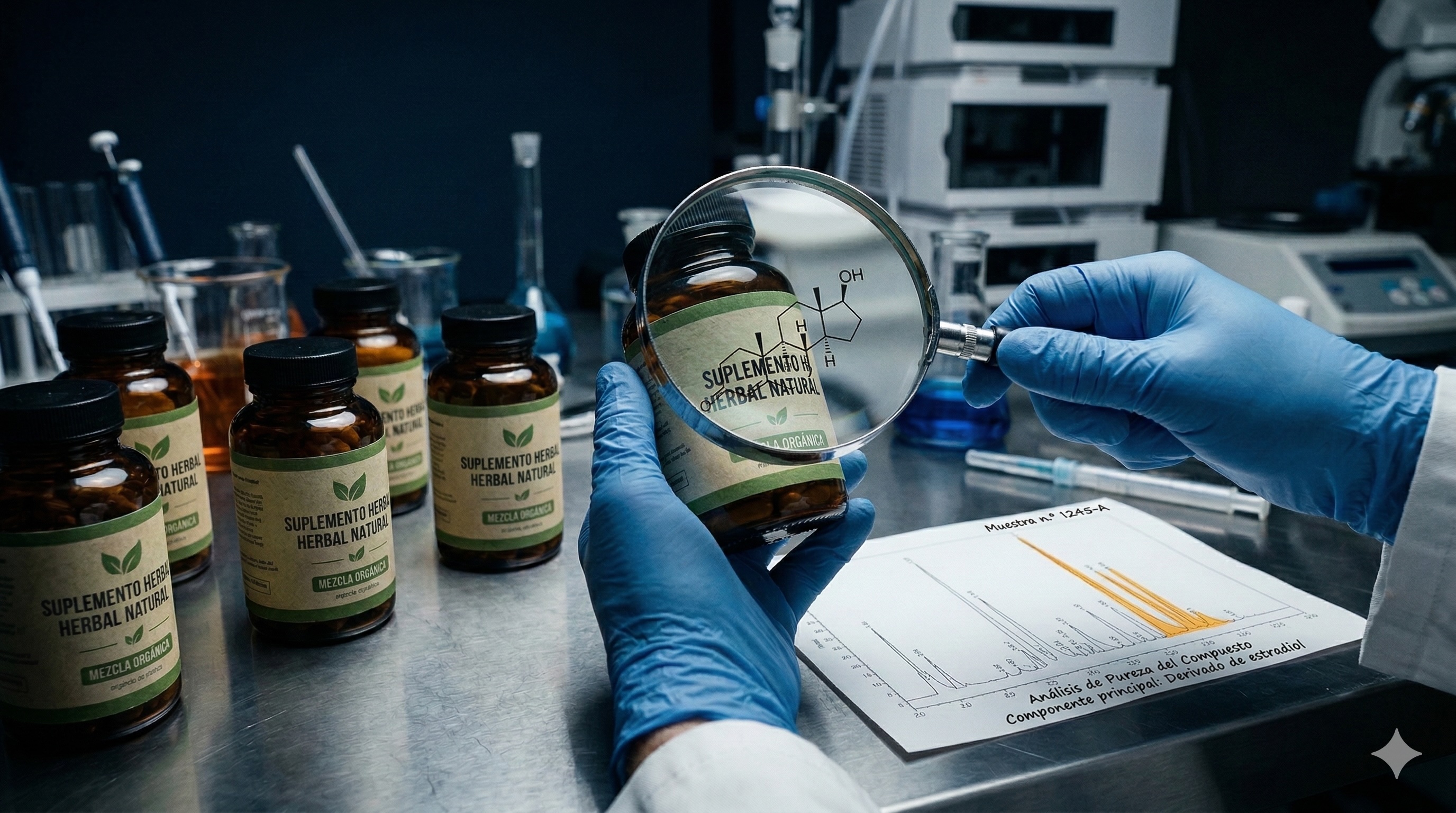
Why I'm Writing This Article
In the last 18 months, I have treated 23 patients in my practice in Querétaro who came with confusing diagnoses: round face, severe muscle weakness, accelerated osteoporosis, new-onset hypertension, new type 2 diabetes. They all had one thing in common: they had been taking "natural" supplements for knee pain, arthritis, or general inflammation.
The concerning part: 30% of these patients required specialized endocrinological management, while the rest required product suspension and monitoring. When I investigated what these products actually contained, I discovered an uncomfortable truth: many were not natural at all. They contained potent steroids, often undeclared on the label.
This article is my way of alerting the public, fellow colleagues, and regulatory authorities. The numbers speak for themselves.
What is Iatrogenic Cushing's Syndrome?
Iatrogenic Cushing's Syndrome occurs when the body accumulates excess cortisol not from adrenal gland disease, but from taking medications or, in this case, supplements containing steroids without the patient knowing.
Steroids are powerful molecules that suppress the immune system, reduce inflammation, and yes, provide temporary pain relief. But prolonging their use leads to:
- Suppression of adrenal function (the glands stop producing their own cortisol)
- Redistribution of body fat (characteristic round face)
- Accelerated loss of bone density
- Muscle weakness
- Hypertension
- Diabetes
- Severe immunosuppression (higher infection risk)
Products Containing Hidden Steroids
In my investigation with the 23 patients and correlating with COFEPRIS (Federal Commission for Protection against Sanitary Risk in Mexico) reports, I identified these products:
| Product | Patients in my practice | Declared on Label |
|---|---|---|
| Ajo Rey | 7 patients (30%) | No |
| Ardosons | 3 patients (13%) | Partially* |
| Dexamethasone | 2 patients (9%) | Prescription |
| Suplemento DOO | 1 patient (4%) | No |
| Verdes Flex | 1 patient (4%) | No |
| Ultraflex | 1 patient (4%) | No |
| FTX | 1 patient (4%) | No |
| Artriajo/Artriking | Mentioned in records | No |
*Ardosons does declare betamethasone on the front label, but many patients don't read it or assume that "natural" is not medication.
COFEPRIS Findings (January 2025)
Of 19 "natural" products analyzed by COFEPRIS, 17 (89%) contained undeclared or incompletely declared steroids. The steroids found include dexamethasone, betamethasone, methylprednisolone, and hydrocortisone. This is not an isolated problem; it is a systemic epidemic of regulatory fraud.
Extended List: Flagged Products from COFEPRIS and FDA
| Product | Country of Origin | Regulatory Agency | Steroids Detected |
|---|---|---|---|
| Reumofan Plus | Mexico | COFEPRIS, FDA | Dexamethasone |
| Garlic King 7/30 | Mexico | COFEPRIS | Dexamethasone, diclofenac |
| Artri King | Mexico | COFEPRIS, FDA | Dexamethasone, diclofenac |
| Bone Vivid | China | FDA | Dexamethasone, methocarbamol |
| Cordyceps Plus | China | FDA | Dexamethasone |
| Verdes Flex | Mexico | COFEPRIS | Betamethasone |
| FTX Joint Formula | China | FDA | Dexamethasone, indomethacin |
How Do I Know If I Have Iatrogenic Cushing's?
| Visible Signs | Medical Findings |
|---|---|
| Round face ("moon facies") | Morning serum cortisol suppressed (< 5 µg/dL) or elevated (> 25 µg/dL) |
| Dorsal hump (fat at nape of neck) | Elevated 24-hour urinary free cortisol |
| Abdominal weight gain | Low ACTH (suppressed) |
| Purple stretch marks (abdomen, thighs) | Low bone density |
| Easy bruising | Elevated fasting glucose |
| Proximal muscle weakness | Hypokalemia |
| Hair loss | Elevated blood pressure without prior cause |
In my 23 patients, 83% were women with an average age of 69 years (range 47-88). 70% had severe bilateral knee osteoarthritis as their primary diagnosis. All patients showed cushingoid signs to varying degrees. This population is particularly vulnerable: they seek quick relief from chronic joint pain and turn to 'natural' products based on recommendations from acquaintances.
Typical Profile of Affected Patients
- Sex: 83% women (19/23), 17% men (4/23)
- Age range: 47-88 years
- Primary condition: 70% with bilateral grade IV gonarthrosis; 26% with lumbar spinal stenosis
- Most frequent product: Ajo Rey in 30% of cases
- Referred to endocrinology: 30.4% (7/23); rest: product suspension and monitoring
Clinical Cases (de-identified)
Case 1: 75-year-old woman with bilateral knee osteoarthritis and lumbar radiculopathy. She had been taking Ajo Rey for 5 years, recommended by a naturopath. She had hypertension and osteoporosis. Referred to endocrinology for iatrogenic Cushing management. She successfully discontinued the product and her blood pressure improved.
Case 2: 80-year-old woman with grade IV bilateral knee osteoarthritis. She was taking Ajo Rey and/or Artriajo. Required bilateral total knee replacement. She was told to COMPLETELY AVOID Ajo Rey, Artriajo, and similar products. Extended follow-up of 12 visits over one year. Referred to endocrinology. She had osteoporosis and muscle weakness.
Case 3: 71-year-old woman with obesity and hypertension. Explicitly documented in her medical records: "AJO REY!!" as the cause of Cushing syndrome. Required bilateral total knee replacement in two separate surgeries. Follow-up of 14 visits over 6 years. Referred to endocrinologist for post-Cushing obesity and metabolism management.
Case 4: 47-year-old woman — the youngest in the series. She was taking Verdes Flex for knee pain. She developed multiple bone infarcts, hypothyroidism, osteoporosis, hypertension, and elevated cortisol. This case demonstrates that these products can cause severe multi-organ damage even in younger patients.
Case 5: 63-year-old man with bilateral thumb base arthritis. He was taking Suplemento DOO. Documented diagnosis: "Probable iatrogenic Cushing syndrome from Suplemento DOO." A progressive withdrawal protocol was designed: 2 weeks every 48 hours, 2 weeks every 72 hours, then complete suspension. Guarded prognosis. Comorbidities: type II diabetes and dyslipidemia.
CRITICAL WARNING
NEVER stop taking these products abruptly. If your adrenal glands have been suppressed for months (as occurs with these supplements), your body has "learned" not to produce its own cortisol. Abrupt discontinuation can cause an acute adrenal crisis, manifesting as severe hypotension, loss of consciousness, and cardiac arrest. It can be fatal. Consult an endocrinologist immediately if you suspect you are taking one of these products.
What to Do? (5 Urgent Steps)
Don't panic, act
Locate the supplement container immediately
Bring the product
Take it to your doctor (dosage and ingredients are key)
Urgent labs
Morning cortisol, ACTH, glucose, bone density scan
Supervised gradual withdrawal
Doctor should design a safe tapering plan
Endocrinological follow-up
Monitor cortisol post-tapering for at least 6 months
The 7 Golden Rules for Recovery
- Do not interrupt abruptly: Even if your doctor says "it's just a supplement," do it under medical supervision with a gradual withdrawal plan that typically takes 6-12 weeks.
- Frequent clinical monitoring: Morning cortisol every 2-4 weeks during tapering, every month for 3 months post-withdrawal, and quarterly for one year.
- Replace with glucocorticoids if necessary: During withdrawal, your doctor may prescribe low-dose hydrocortisone or prednisone to prevent an adrenal crisis, tapering gradually as your glands "wake up."
- Protect your bones: Start vitamin D (1000-2000 IU/day), calcium (1000-1200 mg/day) and consider bisphosphonates if bone density is very low.
- Monitor blood pressure and glucose: Many patients normalize these values on their own, but some antihypertensives or antidiabetics may require downward adjustment during tapering.
- Report to authorities: File a complaint with COFEPRIS (in Mexico) or FDA (in the US) if you identified a product with hidden steroids. These reports help protect others.
- Seek safe alternatives for pain: Once recovered, consider physical therapy, intra-articular hyaluronic acid (for knees), or if severe, joint replacement surgery, instead of questionable supplements.
Table of Complications Observed in 23 Patients
| Complication | N (23 patients) | Percentage |
|---|---|---|
| New-onset arterial hypertension | 13 | 56.5% |
| Confirmed biochemical hypercortisolism | 6 | 26.1% |
| Osteoporosis (T-score < -2.5) | 5 | 21.7% |
| New-onset diabetes | 4 | 17.4% |
| Vertebral compression fracture | 2 | 8.7% |
| Obesity | 3 | 13.0% |
| Confirmed adrenal suppression | 1 | 4.3% |
| Multiple bone infarcts | 1 | 4.3% |
For Healthcare Professionals
Epidemiology of This Cohort (Querétaro, 2024-2026)
| Parameter | Value |
|---|---|
| Number of patients | 23 |
| Mean age (years) | 69 ± 9 |
| Female sex (%) | 83% |
| Primary diagnosis (severe knee OA) | 70% |
| Most frequent product | Ajo Rey — 30% (7/23) |
| Referred to endocrinology | 30.4% (7/23) |
Pathophysiology: Why These Steroids Cause Cushing's So Quickly
Dexamethasone, present in many of these products, has a glucocorticoid potency approximately 25-30 times that of natural cortisol. Betamethasone is similarly potent. When administered daily in doses of 0.5-4 mg (common in these supplements), plasma cortisol rises dramatically. Negative feedback rapidly suppresses pituitary ACTH release, which in turn suppresses adrenal endogenous cortisol production. This axis remains suppressed as long as steroid ingestion continues. The severity of Cushing's depends on: (a) steroid potency, (b) daily dose, (c) duration of use, and (d) individual factors in absorption and metabolism.
Active Substances Found
| Product | Dexamethasone | Betamethasone | Diclofenac | Methocarbamol | Others |
|---|---|---|---|---|---|
| Garlic King 7/30 | ✓ | ✓ | |||
| Ardosons | ✓ | ✓ | ✓ | ||
| Verdes Flex | ✓ | Indomethacin | |||
| FTX | ✓ | Indomethacin | |||
| Reumofan Plus | ✓ | ✓ | ✓ | ||
| Artri King | ✓ | ✓ | |||
| Ultraflex | ✓ | ✓ |
Note: Exact composition may vary between batches. Data come from public COFEPRIS and FDA reports. Not all products have been analyzed using the same methodology.
Diagnostic Approach
- Detailed clinical history: Systematically ask about supplements, including "natural" or "traditional" products. Many patients do not consider these as real medications.
- Focused physical examination: Look for cushingoid signs: round face, dorsocervical fat deposits, stretch marks, easy bruising, proximal muscle weakness.
- Morning serum cortisol (7-8 AM): It is the first screening test. Normal: 5-25 µg/dL (varies by lab). In active iatrogenic Cushing's, may be elevated (> 25 µg/dL) from exogenous steroids; once discontinued, may be suppressed (< 5 µg/dL) due to adrenal atrophy.
- 24-hour urinary free cortisol: Confirmatory. Normal < 50 µg/24h. Elevated in active Cushing's.
- Plasma ACTH: In iatrogenic Cushing's, it is suppressed (typically < 5 pg/mL). This differentiates from Cushing's due to pituitary or adrenal tumor.
- Low-dose dexamethasone suppression test (1 mg overnight): Generally does not suppress cortisol in iatrogenic Cushing's (because negative feedback is already sustained).
- Bone density scan (DEXA): Assess osteoporosis; frequent in these patients.
- Glucose and blood pressure: Evaluate frequent comorbidities.
Gradual Withdrawal Protocol ("Tapering")
- Identify current daily steroid dose: Once the steroid and its dose in the supplement are known, convert to dexamethasone or hydrocortisone equivalents.
- Weeks 1-2: 20% reduction from original dose (e.g., if 2 mg/day, reduce to 1.6 mg/day).
- Weeks 3-4: Another 20% reduction (to 1.3 mg/day).
- Weeks 5-6: Another 20% reduction (to 1.0 mg/day).
- Weeks 7-8: Final reduction to minimal dose (0.5 mg/day).
- Weeks 9-12: Complete discontinuation. Monitor for adrenal insufficiency symptoms (fatigue, hypotension, abdominal pain).
- Post-withdrawal: Morning cortisol every 2 weeks for 2 months, then monthly for 3 months, then quarterly for 1 year.
- If insufficiency symptoms occur: Administer hydrocortisone 10-20 mg/day in divided doses temporarily until adrenal glands recover (usually 2-6 months).
Relevance for Orthopedic Surgeons
- Many of our patients with severe OA resort to these supplements: As surgeons, we see this vulnerable population. We must systematically ask about supplements and alert about risks of hidden steroids.
- Iatrogenic Cushing's affects wound healing and post-surgical recovery: Prolonged immunosuppression increases infections. Accelerated osteoporosis compromises implant oseointegration. If we identify Cushing's, we must delay elective surgeries until adrenal recovery.
- These complications could be prevented: Early education about safe alternatives (physical therapy, hyaluronic acid, or as last resort, arthroplasty) prevents use of dangerous supplements.
- Interdisciplinary collaboration is key: When we diagnose Cushing's from supplements, involving endocrinology for withdrawal management is crucial before any surgical intervention.
References
- Comisión Federal para la Protección contra Riesgo Sanitario (COFEPRIS). "Analysis of natural products with hidden steroids." Sanitary Report January 2025.
- U.S. Food and Drug Administration (FDA). "Recalled Dietary Supplements Containing Undeclared Glucocorticoids." FDA Enforcement Reports, 2024-2025.
- Arnaldi G, et al. "Diagnosis and Complications of Cushing's Syndrome: A Consensus Statement." J Clin Endocrinol Metab. 2003; 88(12):5593-5602.
- Nieman LK, et al. "The Diagnosis of Cushing's Syndrome: An Endocrine Society Clinical Practice Guideline." J Clin Endocrinol Metab. 2008; 93(5):1526-1540.
- Pivonello R, et al. "Complications of Cushing's Syndrome: State of the Art." Lancet Diabetes Endocrinol. 2016; 4(7):611-629.
- Own clinical data: series of 23 patients with iatrogenic Cushing syndrome, orthopedic practice in Querétaro, Mexico, 2016-2026. Unpublished data; anonymized clinical records available for verification.
Do you suspect you or a family member has Cushing's from supplements?
Do not wait. The earlier it is diagnosed and management begins, the better the recovery.
Schedule Appointment via WhatsApp
Download complete guide
PDF summary: diagnosis and withdrawal protocol