If your shoulder has slipped out of place—whether during a game, a fall, or even while reaching—it's natural to feel afraid it will happen again. It's one of the most common concerns I hear from patients here in Querétaro.
Recurrence risk depends on several factors: activity, structural damage, stability, examination, imaging, and personal goals. No single data point determines the next step.
What Is Shoulder Instability?
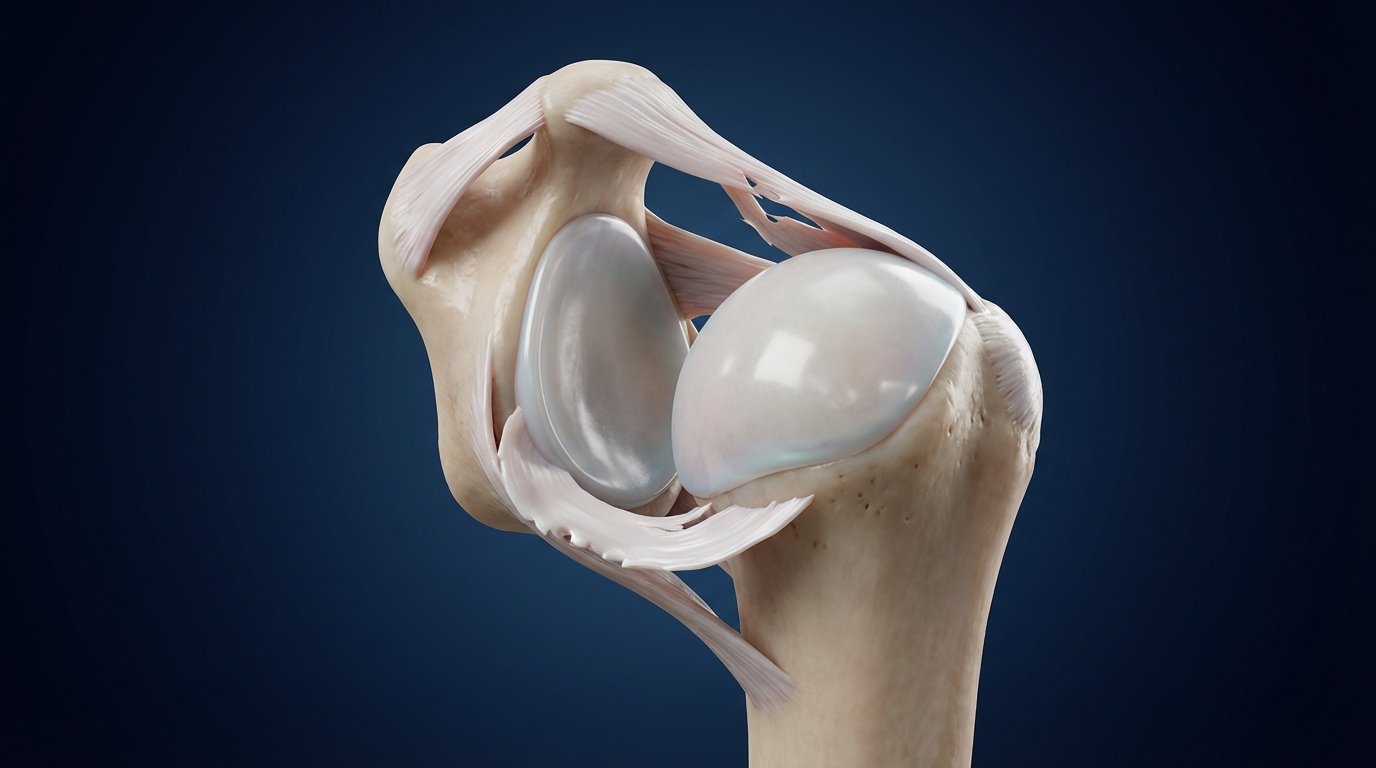
The shoulder works like a ball sitting on a pedestal. The humeral head (the ball) rests in the glenoid cavity (the pedestal), but unlike the hip, this pedestal is very shallow. Imagine a golf ball on a golf tee—that's your shoulder.
Around this joint are support structures: muscles, tendons, and the labrum, a ring of cartilage that acts as a shock absorber and increases stability. When the shoulder dislocates, this labrum frequently tears—an injury known as Bankart lesion. There can also be a dent in the humeral head called Hill-Sachs lesion.
When these structures are damaged, the joint loses stability and the risk of future dislocations increases significantly.
Assessment is multifactorial
Age may add context, but it must be interpreted with activity, stability, structural damage, examination, imaging, and preferences.
Factors That Guide Risk and Treatment
Management is individualized using recurrence, activity, stability, bone loss, associated injuries, rehabilitation response, and preferences. These factors guide discussion but do not independently indicate surgery.
Critical fact:
After a dislocation, recurrence risk is assessed using activity, stability, structural damage, examination, and imaging. Surgery is not automatic because of age or activity.
How Is Shoulder Instability Diagnosed?
In my examination, diagnosis combines what I observe during clinical examination with imaging:
- Physical examination: Specific tests to evaluate shoulder laxity and stability (apprehension test, relocation test)
- Plain radiographs: To rule out associated fractures
- Arthrographic MRI: The gold standard for visualizing the labrum and detecting Bankart lesions
- CT scan: Useful for quantifying bone loss, especially important to decide if Latarjet procedure is needed
Conservative Treatment: When It Works
Non-surgical treatment is a valid option, but with specific conditions:
- Initial immobilization: 3 to 6 weeks in a sling
- Aggressive rehabilitation: Rotator cuff strengthening and scapular stabilizer exercises
- Activity modification: Avoiding contact sports and high-risk movements
Conservative treatment may be appropriate when stability, function, activity profile, and preferences allow a safe plan with follow-up.
Surgical Treatment: Your Options
When surgery is necessary, I have two main options depending on your specific case:
Preoperative Evaluation
Quantify bone loss and assess associated injuries
Bankart Repair
Arthroscopic approach for labral lesions without major bone defects
Latarjet Procedure
For significant bone loss or engaging Hill-Sachs lesion
Rehabilitation
3-6 months of gradual recovery until return to sport
Arthroscopic Bankart Repair
This is my technique of choice for most cases. It's performed entirely arthroscopically (minimally invasive) and consists of repairing the torn labrum. Results are often favorable when there is no significant bone loss and the technique is chosen individually.
Advantages:
- Faster recovery than open surgery
- Less postoperative pain
- Minimal scarring (only small incisions)
- High success rate
Latarjet Procedure
This procedure is considered when there is significant bone loss in the glenoid cavity or when a Hill-Sachs lesion will engage during movement. In this case, I transfer a bone fragment (coracoid process) from your scapula to the shoulder cavity, increasing stability.
It's a more complex technique than simple Bankart repair, with an important learning curve, but with good results in well-selected cases.
Bankart vs. Latarjet Comparison
| Aspect | Bankart Repair | Latarjet Procedure |
|---|---|---|
| Primary indication | Bankart lesion without significant bone loss | Significant bone loss or engaging Hill-Sachs |
| Approach | Arthroscopic (minimally invasive) | Open or hybrid |
| Success rate | Often favorable in well-selected cases | Often favorable when well indicated |
| Recovery | 4-6 weeks (normal activity) | 6-8 weeks (normal activity) |
| Postoperative pain | Mild to moderate | Moderate |
When Should I Have Surgery? Clear Criteria
This is the question I'm asked most often, and the answer depends on several factors:
- Recurrent dislocations: Repeated episodes are a reason to assess stability, structural damage, and surgical options individually.
- First episode in young contact-sport patients: Recurrence risk should be assessed individually using activity, examination, and imaging.
- Significant bone defect: Bone findings are quantified and integrated with stability, activity, and history when discussing treatment options.
- Insufficient response to conservative treatment: Persistent instability after an adequate period of well-performed rehabilitation warrants reassessment.
My professional advice:
After a dislocation, assess stability, structural damage, activity, preferences, and rehabilitation response. Early surgery may be discussed, but it is not automatically indicated by age or a first episode.
Postoperative Recovery: The Timeline
Recovery after Bankart repair follows this general process:
Weeks 1-4: Immobilization and Passive Movement
- Sling for 4-6 weeks
- Gentle passive movements to maintain range
- Ice and elevation to reduce inflammation
Weeks 4-8: Active-Assisted Movement
- Beginning of active shoulder movement
- Rotator cuff strengthening
- Specialized physical therapy 3 times per week
Weeks 8-12: Active Rehabilitation
- More intense strengthening exercises
- Full range of motion work
- Advanced scapular stabilization
Weeks 12-16+: Return to Sport
- Sport-specific exercises
- Gradual intensity progression
- Complete return between 4-6 months in most cases
Frequently Asked Questions
How many times does the shoulder have to dislocate before surgery is needed?
Recommendations have evolved. The decision no longer depends on waiting for a fixed number of dislocations. After a first episode, management is individualized using activity, structural damage, stability, preferences, and recurrence risk; early surgery is an option, not an automatic indication.
Can you live with an unstable shoulder without surgery?
Yes, in selected cases. Nonoperative management depends on stability, activity, structural damage, function, preferences, and rehabilitation response, with individualized follow-up.
How long does Bankart repair surgery take?
Arthroscopic Bankart repair typically takes between 45 minutes and 1.5 hours, depending on injury complexity. Latarjet procedure can take 90 minutes to 2 hours.
Can I return to sports after surgery?
Yes, most of my patients return to their usual sport between 4-6 months after surgery, as long as they complete appropriate rehabilitation. Contact sports require more aggressive rehabilitation. The key is strict adherence to the physical therapy program.
What happens if I don't have surgery and the shoulder keeps dislocating?
Recurrent dislocations may produce additional damage and should prompt renewed clinical and imaging assessment. If surgery is considered, the decision is shared and individualized.
Does arthroscopic surgery leave a scar?
The advantage of arthroscopy is that it leaves only 3-4 small incisions (5-10 mm each). Scars are minimal, almost invisible after a few months, especially compared to open surgery which would require a 5-7 cm incision.
Did you have a shoulder dislocation?
I personally evaluate your case and clearly explain your options regarding shoulder instability and dislocation.
Schedule appointment via WhatsApp