When your orthopedic surgeon mentions knee replacement, fear is usually the first reaction. You've heard stories. You worry about pain, infection, anesthesia, or that the artificial knee won't work right. Maybe you think you're too old—or too young—for this surgery. These fears are understandable, but they're often built more on myths than facts.
In this guide, I address the seven most common fears about knee replacement, backed by evidence and real outcomes. You'll learn what actually happens before, during, and after surgery, why modern pain management works, and why many patients report satisfaction with their results.
Why Is Knee Replacement So Frightening?
Fear of surgery is documented across the medical literature as one of the biggest barriers to treatment. Several psychological factors contribute:
- Negative stories spread faster: You're far more likely to hear about the one person who had complications than the hundreds who recovered smoothly.
- Loss of control: Being asleep during surgery, trusting someone with your body, and depending on rehabilitation creates anxiety.
- Unknown territory: If you've never had surgery before, the process feels alien and scary.
- Pain anticipation: You already have chronic knee pain. The idea of surgical pain—even temporary—feels unbearable.
These reactions are normal. What's important is separating fear from actual risk. Let's look at what the data actually shows.
The 7 Most Common Fears (and the Reality Behind Each One)
1. "I Know Someone Who Had a Bad Experience" — Rejection & Infection
The fear: Your body might reject the artificial knee. Or an infection could devastate your recovery.
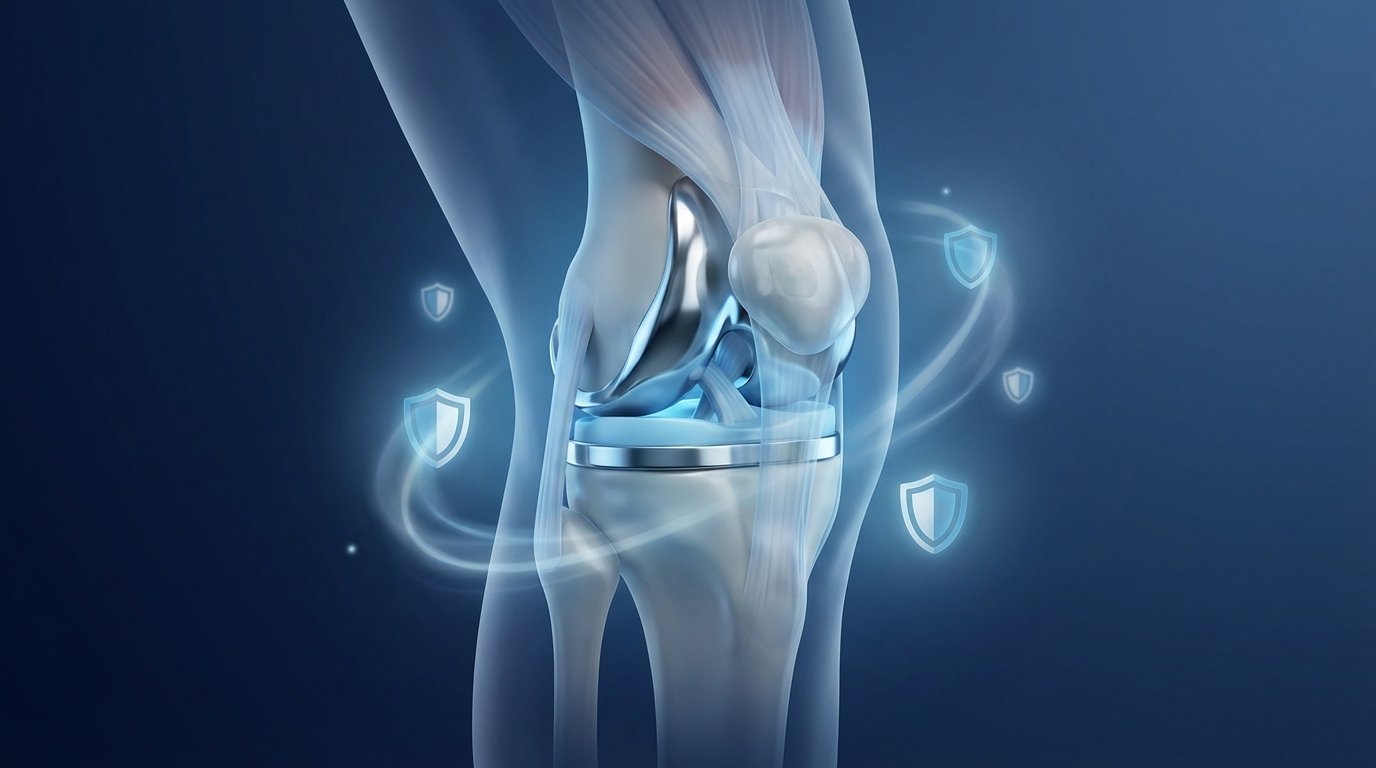
The reality: "Rejection" of a knee implant doesn't exist. Rejection applies to organ transplants (like hearts or kidneys), where your immune system attacks living tissue that's genetically foreign. A knee prosthesis is made of titanium and polyethylene—inert materials. Your body doesn't reject them any more than it rejects a dental filling.
Infection rates are low and manageable
Surgical site infections after knee replacement are uncommon in well-controlled environments with antibiotic prophylaxis and sterile technique, but they remain a real complication that requires prevention and prompt treatment. When infection does occur, it's usually caught early with symptoms like fever, increasing redness, or drainage—all treatable with antibiotics or, rarely, a surgical washout.
The materials used (medical-grade titanium alloys, cobalt-chromium, and ultrahigh molecular weight polyethylene) have been biocompatible for decades. Millions of people worldwide live comfortably with knee, hip, and shoulder implants.
2. "I'm Afraid of Anesthesia"
The fear: You'll wake up during surgery. You'll have a bad reaction to anesthesia. You won't wake up at all.
The reality: Modern anesthesia is remarkably safe. Most knee replacements don't use general anesthesia at all. Many centers use a spinal block (an injection in your back) to numb the lower body. It's a well-established, safe technique.
Our team takes a different approach: regional anesthesia with sedation and peripheral nerve blocks in the thigh — without touching the spine. The nerves that provide sensation to the knee are blocked directly in the leg, while you're comfortably sedated. The advantages include:
- No spinal puncture: This eliminates risks associated with neuraxial blockade (post-dural puncture headache, urinary retention).
- Less nausea: By avoiding both spinal and general anesthesia, postoperative nausea and vomiting are minimal.
- Faster sensory recovery: The peripheral block only affects the operated leg, so you can move the other leg immediately.
- Earlier discharge: Regaining mobility sooner means rehabilitation can start the same day.
- Continuous monitoring: Heart rate, blood pressure, oxygen, and carbon dioxide are tracked every second throughout the procedure.
Serious anesthetic complications are rare — estimated at 1 in tens of thousands of procedures in patients without major medical conditions.
3. "The Pain After Surgery Must Be Unbearable"
The fear: You'll be in agony after surgery. You'll need heavy opioid medications. The recovery will be worse than living with arthritis.
The reality: Pain after knee replacement is real, but it's not "unbearable," and it's aggressively managed.
Modern pain management is multimodal
We don't rely on a single painkiller. Instead, we combine several medications and techniques: a long-acting local anesthetic block before surgery, anti-inflammatory medications, pain relievers, and mild opioids as prescribed by your surgeon (typically only for the first few days), and physical therapy exercises that actually reduce pain over time by improving function.
Most patients report that their pain the first 24 hours after surgery is 4 to 6 out of 10—uncomfortable, but manageable. Within a week, many patients are off opioids entirely. Within 2 weeks, most patients are doing basic walking and light activities.
And here's the key: the pain decreases predictably. You're not stuck with it. Compare that to chronic arthritis pain, which gets worse and never improves without surgery.
4. "What If It Doesn't Work? Will I Walk Normally Again?"
The fear: You'll spend months in rehabilitation and still end up limping, limited, and wishing you hadn't done it.
The reality: Many knee replacement patients report satisfaction with their result when expectations are realistic. Most walk without a limp. Many return to activities like golf, swimming, travel, and hiking that arthritis had made impossible.
Timeline expectations:
- Week 1: Most patients are walking with a walker or crutches, knee movement improving each day.
- Week 2-3: Many transition to a cane or walk without assistive device indoors.
- Week 6: Return to office work, driving, light household activities. Most patients are sleeping through the night.
- Week 8-12: Return to walking, stationary cycling, and gym-based exercise with a physical therapist.
- 3-6 months: Return to most daily activities. Advanced exercises, longer walking distances, and sports-specific training can begin.
Walking "normally" means different things at different ages, but the goal is functional, pain-free movement. Most patients achieve that within 3 months. Some athletes are back to competitive sports within 6 months. Others, especially older patients, prioritize pain relief and light activity—and they get that too.
5. "I'm Too Old (or Too Young) for This"
The fear: You're worried about age limits—either you won't survive surgery at 75, or if you do it at 55, you'll need another one by the time you're 85.
The reality: There is no age cutoff. What matters is overall health, not the calendar.
- Older patients: We regularly perform knee replacements on patients in their 80s and 90s with good outcomes. Age alone doesn't increase risk; uncontrolled diabetes, heart disease, or severe lung disease do. If you're healthy enough to walk around your neighborhood, you're likely healthy enough for surgery.
- Younger patients: Implant longevity varies. Younger patients should discuss wear, follow-up, and the possibility of revision surgery over their lifetime. We also use robotic surgical guidance (CORI) to maximize precision and longevity, especially in younger patients where preserving bone is important for future revision if needed.
- Quality of life matters at any age: Whether you're 45 or 85, decades of chronic pain and limited mobility are a heavy burden. Surgery that eliminates pain and restores function is worth considering at any age.
6. "I Can't Afford a Knee Replacement"
The fear: Surgery is prohibitively expensive. You'll go bankrupt.
The reality: In Querétaro, Mexico, a complete knee replacement with a surgeon, anesthesia, operating room, implants, and 1-2 days of hospitalization requires an individualized written quote because package contents and complexity vary widely. In the United States, published figures often cite ranges starting near $35,000 to $70,000. In Canada, it's covered by provincial health insurance but with wait times of 6-12 months.
Medical tourism in Mexico is a real option
Many U.S. and Canadian patients travel to Mexico for knee replacement surgery with surgeons trained at top institutions and using the same prosthetic brands (Smith+Nephew, Stryker, Zimmer Biomet) as hospitals north of the border. Waiting time, cost, included services, and follow-up vary by patient and provider and should be confirmed in writing before traveling.
Cost-benefit analysis:
- Chronic arthritis pain costs you in lost work productivity, lost activities, depression, and pain medications (which have side effects and cost).
- The financial decision should consider the proposed procedure, rehabilitation, potential complications and your individual circumstances.
- In Mexico, that payoff is achieved at roughly one-tenth the U.S. cost.
Insurance and financing: If you're in Mexico, most private medical insurance covers knee replacement (with a deductible). If you're self-paying, many surgical centers offer payment plans. If you're traveling from the U.S. or Canada, the total cost—including surgery, travel, and accommodation—is often less than you'd pay for copays and deductibles at home.
7. "Recovery Takes Too Long"
The fear: You'll be out of work for months. You won't be able to travel, exercise, or do things you enjoy for a long time.
The reality: Recovery is faster than most people expect, especially with modern ERAS (Enhanced Recovery After Surgery) protocols.
Day 1
Walking with walker, knee bending 0-60°
Week 2
Walking without walker, transitioning to cane
Week 6
Back to office work, driving, light activity
Month 3+
Full return to most activities
With ERAS protocols, the majority of patients walk without assistance within the first two weeks and return to office work within four to six weeks. If your job involves heavy labor or requires you to be on your feet all day, you might need 8-12 weeks. But for desk work, remote work, or light duty, you can often manage four to six weeks of modified work or leave.
What Does CORI Robotic Assistance Add?
The CORI system helps the surgeon create a model of the knee during the procedure and plan implant positioning based on the individual's anatomy. The surgeon remains in control and makes the clinical decisions.
Robotic assistance is a planning and execution tool. It does not replace appropriate patient selection, the surgical team, or rehabilitation, and it does not guarantee pain relief, function, or implant longevity.
Dr. Balcázar uses the CORI system for knee replacement in Querétaro. Whether it is appropriate is determined individually during the clinical assessment.
Frequently Asked Questions
Can my body reject a knee prosthesis?
No. Modern materials like titanium and polyethylene are biocompatible. The concept of rejection applies to organ transplants, not orthopedic implants. The materials used in knee prostheses have been safely implanted for decades.
How long does a knee replacement last?
Implant longevity varies with the implant, positioning, activity, health, and follow-up. Your surgeon can discuss expectations for your individual situation without guaranteeing a specific duration.
Can I exercise after a knee replacement?
Yes. Walking, swimming, cycling, and golf are safe activities recommended after knee replacement. High-impact sports like running on pavement or soccer should be avoided. Your physical therapist will guide you on what's safe as you progress.
Is there a weight limit for knee replacement surgery?
There is no absolute limit, but a BMI over 40 increases complication risk. Weight management before surgery improves outcomes and may improve longevity of the implant. We can discuss strategies to optimize your health before surgery.
What if I already had knee surgery that failed?
Revision surgery exists and is often successful. An evaluation is needed to determine the cause of the failure and available options. Schedule a consultation to review your specific case. Your previous surgical history doesn't disqualify you from revision.
Ready to Take Control of Your Knee Pain?
Let's discuss whether knee replacement is the right option for you. We'll review your imaging, answer your questions, and develop a personalized plan—whether that's surgery or conservative management.
Schedule appointment via WhatsApp