If you've been told you need a knee replacement, you probably have many questions: what does the surgery involve? How long is the recovery? What technology is available? This guide explains robotic assistance, how CORI works, and its limits. Technology does not guarantee a specific clinical outcome.
CORI in Querétaro
CORI is used for selected knee replacement procedures at Centro Médico Jurica. Availability, candidacy, hospital fees, and insurance coverage are confirmed individually before scheduling.
What is a knee replacement?
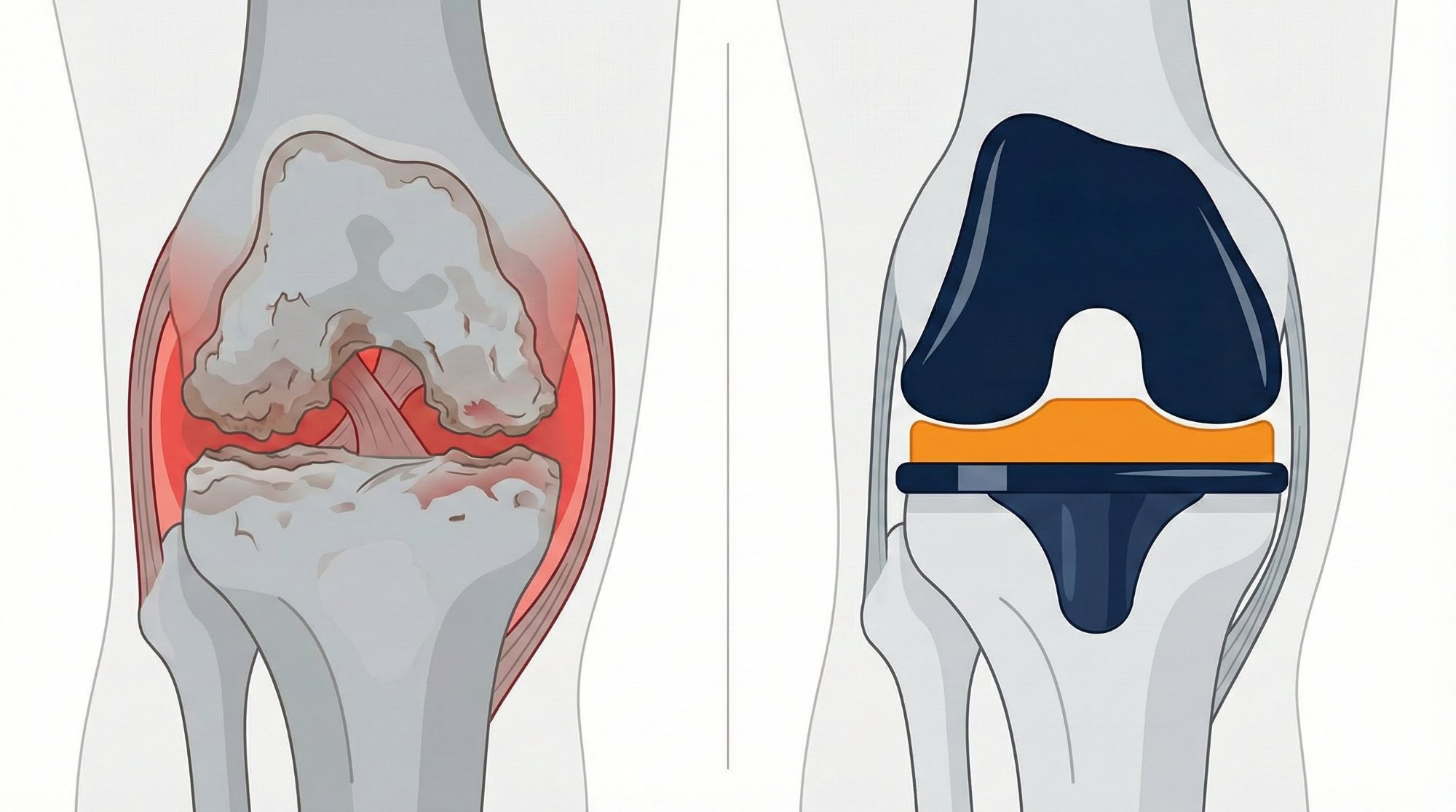
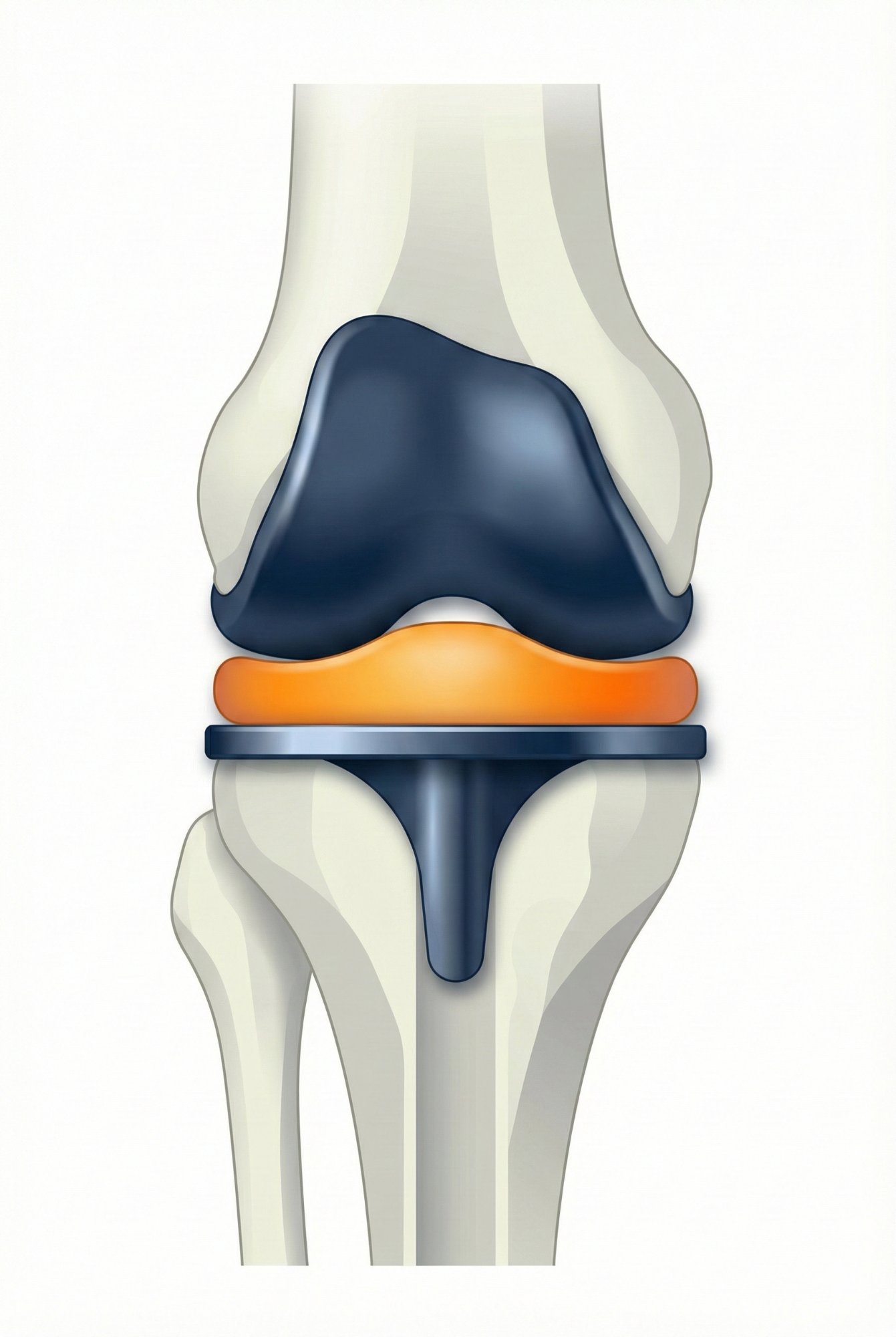
A total knee replacement (also called total knee arthroplasty) replaces the damaged surfaces of the femur and tibia with metal components and a polyethylene insert that forms the new articulating surface.
It's indicated when osteoarthritis (cartilage wear) has progressed to the point where pain limits everyday activities like walking, climbing stairs, or sleeping, and conservative treatments no longer provide sufficient relief.
What is robotic knee surgery?
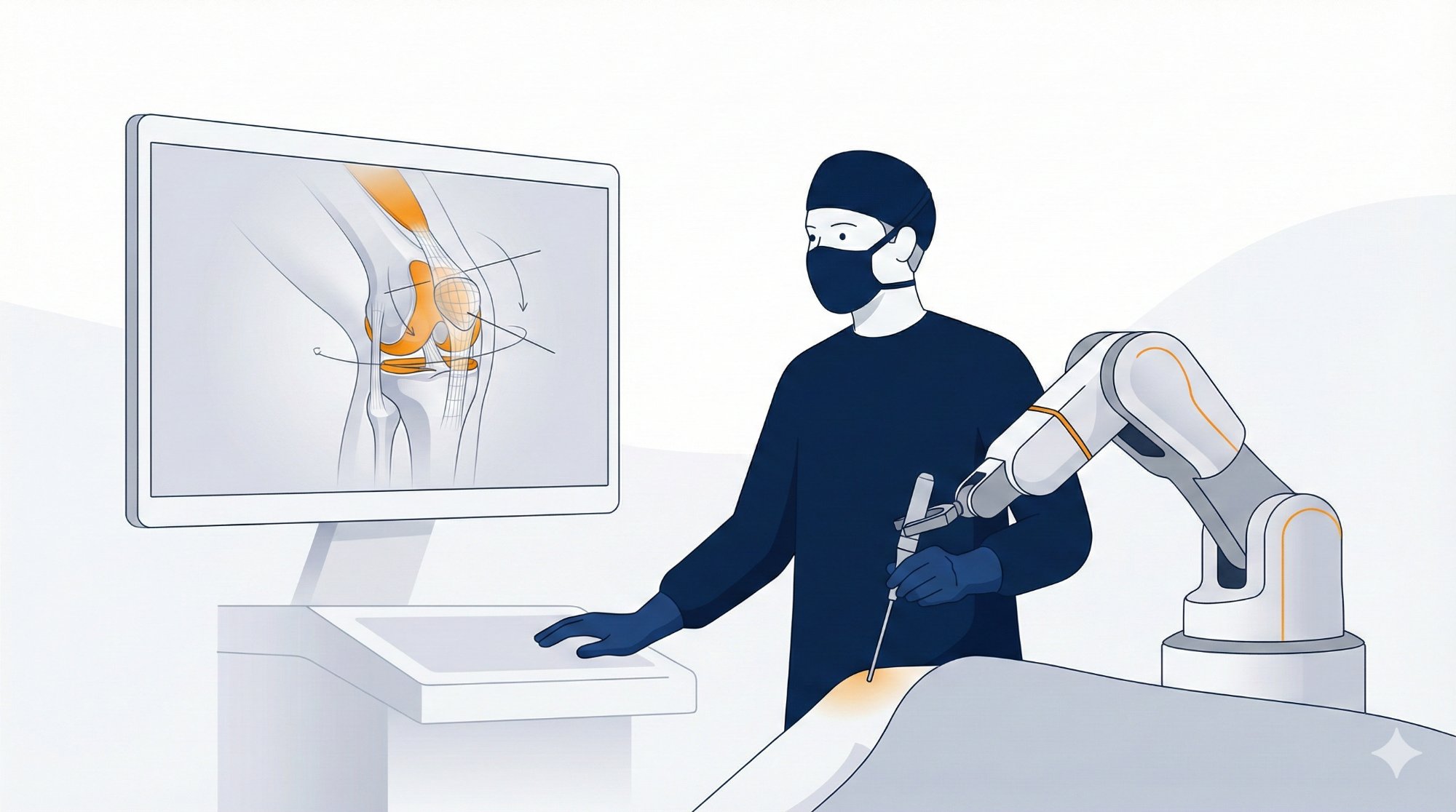
Robotic knee surgery does not mean a robot operates on you. The surgeon performs the entire operation. The robotic system is a precision tool that assists the surgeon at two critical moments:
- Before the cuts: it creates a three-dimensional model of your knee to plan the exact implant size, cutting angles, and optimal alignment.
- During the cuts: it assists bone-cut execution and provides intraoperative information about the surgical plan and ligament balance.
In my practice, I use the CORI system by Smith+Nephew with Anthem implants. CORI can generate the 3D plan intraoperatively without a preoperative CT scan. The surgeon reviews and adjusts the plan as needed during the procedure.
How it works: step by step
Evaluation
Weight-bearing X-rays, exam, medical history
Prehab
Medical optimization and pre-surgery strengthening
CORI Surgery
3D model, guided cuts, ligament balancing
Recovery
Individual mobilization, rehabilitation, and follow-up
1. Office evaluation
We review weight-bearing X-rays to confirm the degree of arthritis, assess deformity (varus or valgus), and determine whether replacement is the best option. Not everyone with "wear" needs surgery.
2. Prehabilitation
Before surgery, modifiable factors such as weight, blood sugar, blood pressure, strength, and inflammation are reviewed. Preparation is adapted to each patient's needs and safety.
3. In the operating room with CORI
Under regional anesthesia:
- Sensors are placed on the femur and tibia so the system can map your knee anatomy
- CORI generates the 3D model and proposes the plan: implant size, cutting angles, alignment
- The surgeon reviews, adjusts if needed, and executes the cuts with robotic guidance
- Each cut is verified against the plan in real time
- Ligament balance is assessed and fine-tuned before cementing the components
4. Recovery (ERAS protocol)
Mobilization, discharge, and rehabilitation are guided by clinical and functional criteria. Timing varies with the patient's condition, procedure, and individual progress.
Robotic vs. conventional: what's different?
| Aspect | Conventional | Robotic-assisted (CORI) |
|---|---|---|
| Planning | Based on X-rays and mechanical guides | Personalized intraoperative 3D model |
| Cut precision | Mechanical guides according to the selected technique | Assistance and verification against the intraoperative plan |
| Ligament balance | Intraoperative assessment by the surgeon | Additional intraoperative data to support assessment |
| Alignment | Usually standard mechanical axis | Customizable: kinematic or mechanical, based on your anatomy |
| Bone preservation | Resections defined by the conventional technique | Individual planning of resections |
CORI provides planning and intraoperative data to support execution of the surgical plan. This technical capability does not guarantee less pain, faster recovery, longer implant survival, or better outcomes for every patient. The surgeon remains in control.
Who is a candidate?
Robotic assistance may be considered for some total knee replacement candidates. Its potential role is assessed individually, including situations such as:
- Complex deformity or anatomy requiring individualized planning
- Need to plan resections around the patient's anatomy
- Patients with prior hardware in the ipsilateral femur (nail, plate, hip replacement) where conventional intramedullary guides can't be used
- Atypical anatomy where standard planning may not fit well
For international patients
English-language coordination is available for patients who live outside Querétaro. Important points to confirm before travel include:
- Communication: I speak English and all pre-op instructions, consent forms, and post-op care plans can be provided in English
- Cost: A written quote is provided after evaluation; hospital and implant costs vary by case
- Insurance: Coverage and reimbursement must be confirmed directly with the insurer before scheduling
- Follow-up: We coordinate post-operative rehabilitation locally and can share records with your physician back home
Frequently asked questions
Does a robot operate on me?
No. The surgeon performs the entire operation. CORI is a tool that guides and verifies the cuts — similar to how GPS guides a driver, but the surgeon remains in full control.
Is it more or less painful than conventional surgery?
Post-operative pain varies between patients, and robotic assistance does not guarantee less pain. Pain management and rehabilitation are individualized after clinical assessment.
How much does it cost?
Cost depends on the hospital, materials, and contracted coverage. A written quote is provided after consultation; insurance coverage must be confirmed directly with the carrier.
How long is recovery?
Mobilization, discharge, and rehabilitation time depend on clinical condition and individual progress. The treating team defines functional goals and follow-up for each patient.
How long does the implant last?
Implant longevity depends on multiple factors, including implant type, indication, technique, activity, and follow-up. Robotic assistance does not guarantee longer implant survival.
Looking for exercises for this condition?
We have step-by-step rehabilitation guides with illustrated exercises and evidence-based protocols.
View guide: Post-Knee Replacement Rehabilitation →View guide: Grade IV Osteoarthritis →
Knee pain limiting your daily life?
We'll evaluate whether robotic knee replacement is the right option for you. Written quote provided. English-speaking staff.
Schedule evaluation via WhatsApp